
The Castor Oil Coating Issue Most Brands Ignore
Toor dal is one of India’s most consumed pulses and one of the most routinely treated. The standard industry practice is to coat toor dal in castor oil (sometimes listed as “edible oil” or “processing aid” on labels). The oil makes the dal look premium and shiny, and acts as a barrier against weevil infestation during long warehouse storage.
Castor oil is a known laxative. Regular daily consumption of castor-oil coated dal contributes to chronic low-level digestive irritation. The coating also prevents the dal from absorbing water uniformly during cooking – which is why castor-oil coated toor dal takes longer to cook and produces a less clean, less bright flavour in the finished dish.
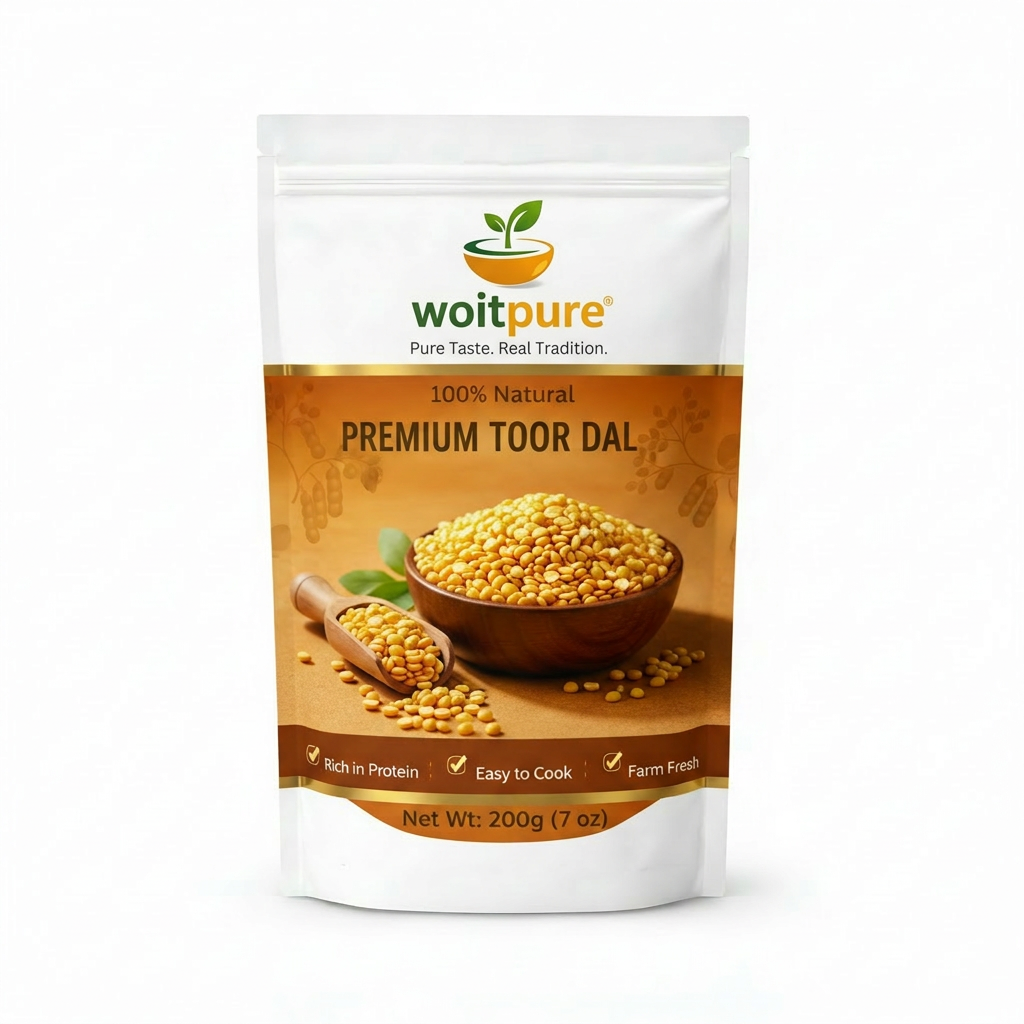
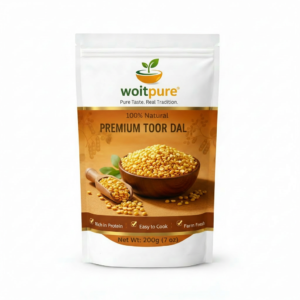
Woitpure Toor Dal is oil-free. It looks matte. It cooks faster. The foam generated when boiling is natural starch – not castor oil burning off.
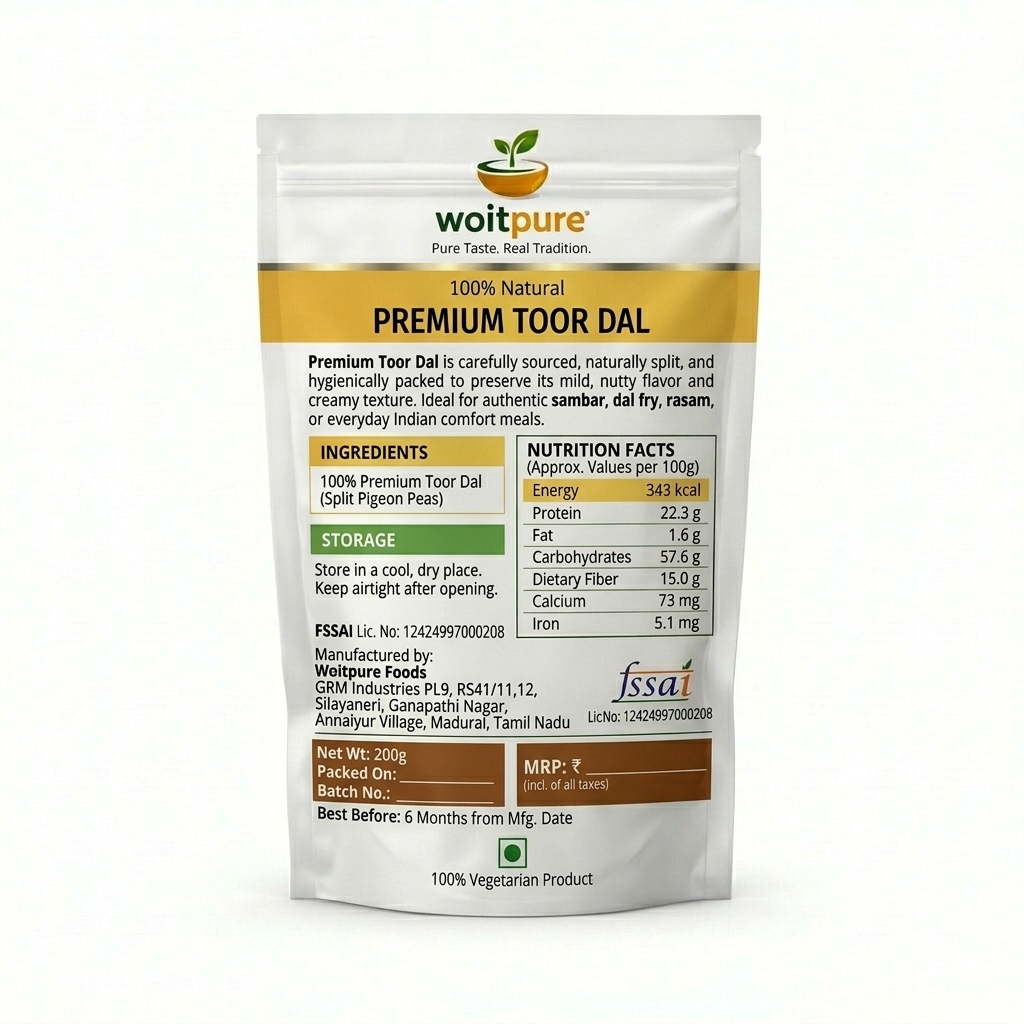
- 22g protein per 100g
- Unpolished – bran layer and B-vitamins intact
- Zero castor oil or edible oil coating – tested per batch
- Cooks 15-20% faster than coated varieties
- Certified organic
Product Specifications
| Weight | 200g (7 oz) |
| Origin | Organic farms, Maharashtra and AP |
| Processing | Unpolished, no coating |
| Packaging | Resealable zip pouch |
| Shelf Life | 12 months |
How to Use
Simple Dal Tadka: Pressure cook 100g toor dal – 3 whistles on medium flame, no soaking needed. Temper with ghee, mustard seeds, dried red chilli, and fresh curry leaves. The flavour improvement over coated dal is immediate and noticeable.
Rasam: Cook dal very soft, extract thin liquid, season with tamarind, tomato, black pepper, and jeera. Classic South Indian home cooking at its most nourishing.
Dal Dhokli: Combine thin toor dal with small whole wheat flour pieces cooked together. Complete one-pot protein meal from Gujarati tradition.
Reviews
There are no reviews yet.